Beth Chatto – memories of a pioneering plantswoman
The Beth Chatto Gardens celebrates its 65th anniversary this year. Roy Lancaster shares memories of his friendship with a fellow gardening legend
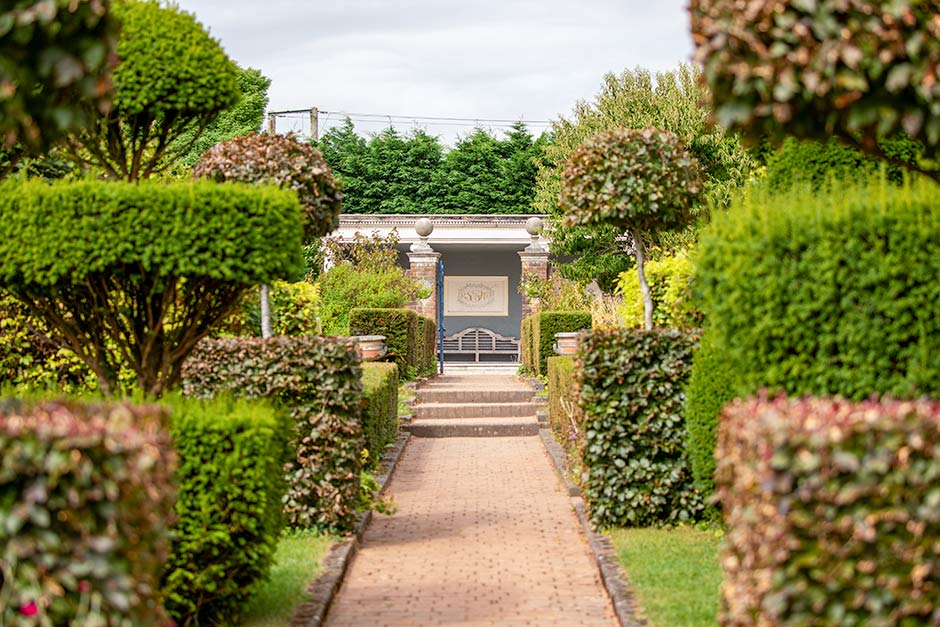
My first letter to the celebrated late gardener, plantswoman, author, nurserywoman and friend, Beth Chatto, began on a rather formal note. I always thought about ‘painting the sky’. Look up and see all the different shapes of these trees. None of them were here when we came. It’s easy enough to paint the ground to provide colour, but you have to live 20, 30 or 40 years before your trees paint the sky.
It was written in 1972 and, though I was aware of her work and passion for plants, I had yet to meet her, and would not dream of being overfamiliar.
A growing friendship
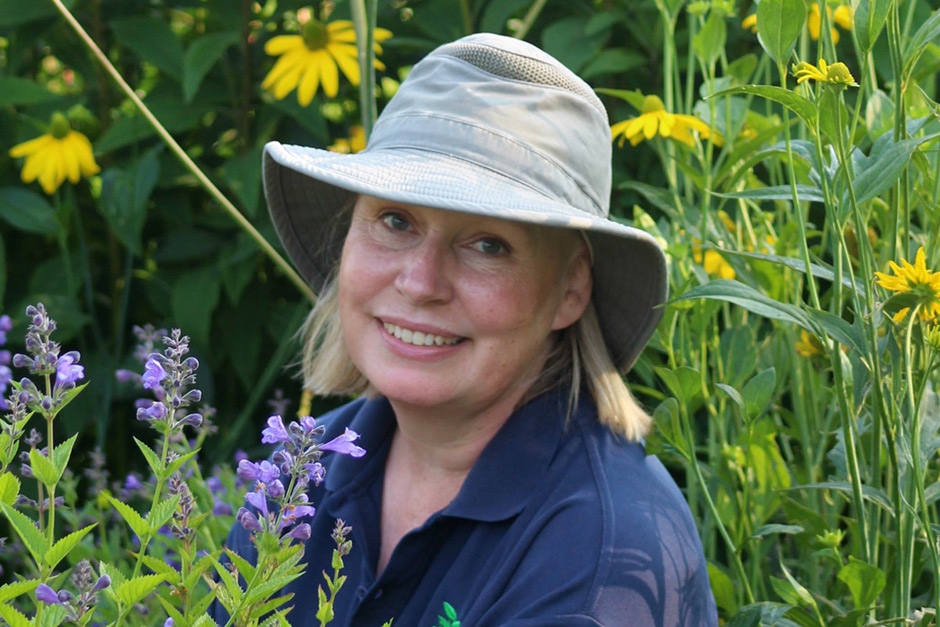
Beth Chatto and Roy Lancaster in the Beth Chatto Gardens, Essex
I suggested that we settle ourselves in a quiet place where we could talk and reminisce. She chose a seat on the small private paved terrace close to her house, beneath one of the finest examples of golden larch from China (Pseudolarix amabilis) that I have seen in Britain. It was a well-shaped tree, the branches of its spreading crown studded with cones, reminding me of small yellow-green globe artichokes, while abundant

Right plant, right place
Silent space area at Beth Chatto’s Plants & Gardens
Were the Water and Woodland Garden and the famous Gravel Garden a result of this thinking? “Yes, very much so, but we started with the dry, gravelly areas. Our rainfall is very low, 50cm (20in) on average in a year, but many plants do survive.” She is keen to stress that hers is not an ecological garden – that is, a replica of wild plant communities.
Beth confessed that she had never even heard of Cedric Morris until one day in the late 1940s, when a mutual friend took Andrew and her to meet him. It was, Beth said, ‘the day that changed our lives’. They toured the garden, ‘Andrew and Cedric talking Latin and I simply taking in all the shapes and textures’. Walking through Cedric’s garden was, for Beth, like being a child in a sweet shop. ‘So many plants new to me, so many of them garden-worthy. I wanted to grow them all, especially the euphorbias, alliums, species crocus, tulips and fritillaries which were not so commonly grown in gardens then.
Memories of Cedric Morris, his garden and his plants come easily to Beth. Not surprisingly, they have helped shape so many of her successful planting schemes, as well as her pioneering and never-to-be-forgotten exhibits at the RHS Chelsea Flower Show in the late 1970s and 1980s that won her 10 consecutive gold medals.
Walk around the garden today, or her nursery for that matter, and you will find many plants recalling the influence of Cedric Morris as well as the late Graham Stuart Thomas and the late Christopher Lloyd, both of whom she counted as special friends. Indeed, it was in Morris’s garden that she first met Thomas. He and Cedric had similar tastes, especially in plants; both loved
She remembers being given Christopher Lloyd’s The Well-Tempered Garden and admits that she knew of him but did not know him. ‘I was bowled over and couldn’t put it down. I took it to bed and read on and on. I hadn’t read a book like it – and still haven’t – and I don’t think he wrote anything better. It was a delight.’
“There are many plants that horticulturists have ‘improved’ to make them more garden worthy, but to take them right out of character worries me,” she said. “To take just two examples, new Echinacea cultivars are constantly being introduced; now we have yellow flowers and flame instead of lovely strawberry pink ones of the prairie with their bronzy-brown centres. Then there are Helleborus × hybridus, which I first admired in Cedric’s garden. But they have now been taken up and improved, yes, but in some cases too far. I don’t want doubles in preference to singles, or for them to hold their faces up like buttercups.”
But what of the plants she grows, especially those she has found most useful or decorative over the years, such as Calamintha nepeta subsp. nepeta, whose tiny flowers always attract a host of nectar-seeking insects? “Every year it makes a haze of pale, slaty blue – quite charming,” she said. “It all depends on where you put it. It’s part of the companion planting: we all need star performers, but you also want the quieter things, too.”
What about Genista aetnensis (Mount Etna broom), which is wonderful in Beth’s gravel garden? I used to have a large specimen of this multistemmed shrub in my own garden, where I looked forward to its slender weeping branches flooded with tiny fragrant yellow pea flowers in July until it grew old and died. “Oh yes, I have lost them too, but then a garden doesn’t stand still. It’s not a picture hanging on a wall. It’s really different from one day to the next, let alone one month or one year, and now I’ve had this garden for 50 years but I am constantly thinking and planning ahead.”
Genista aetnensis
To appreciate, enjoy and learn from the plants Beth has grown and grows now, first consult her books and then visit her garden to see the many shapes, the varied hues, the happy associations – and the trees that paint the sky.
As I write these words I have to hand a copy of the 2009 Beth Chatto Gardens Mail Order List, packed with names and photographs of plants old and new. Its first page carries a portrait of a sprightly Beth Chatto OBE, VMH at 86, calm and confident. It accompanies an encouraging message from her, reflecting on the disturbing times in which we live. It ends with the following words:
“For you to carry on being a contented gardener, is the wish of Beth Chatto and her staff.” It is a statement so typical of a woman regarded by many as a national treasure, and a poignant legacy.